
How Much Does Tree Removal Cost in California?
November 13, 2026
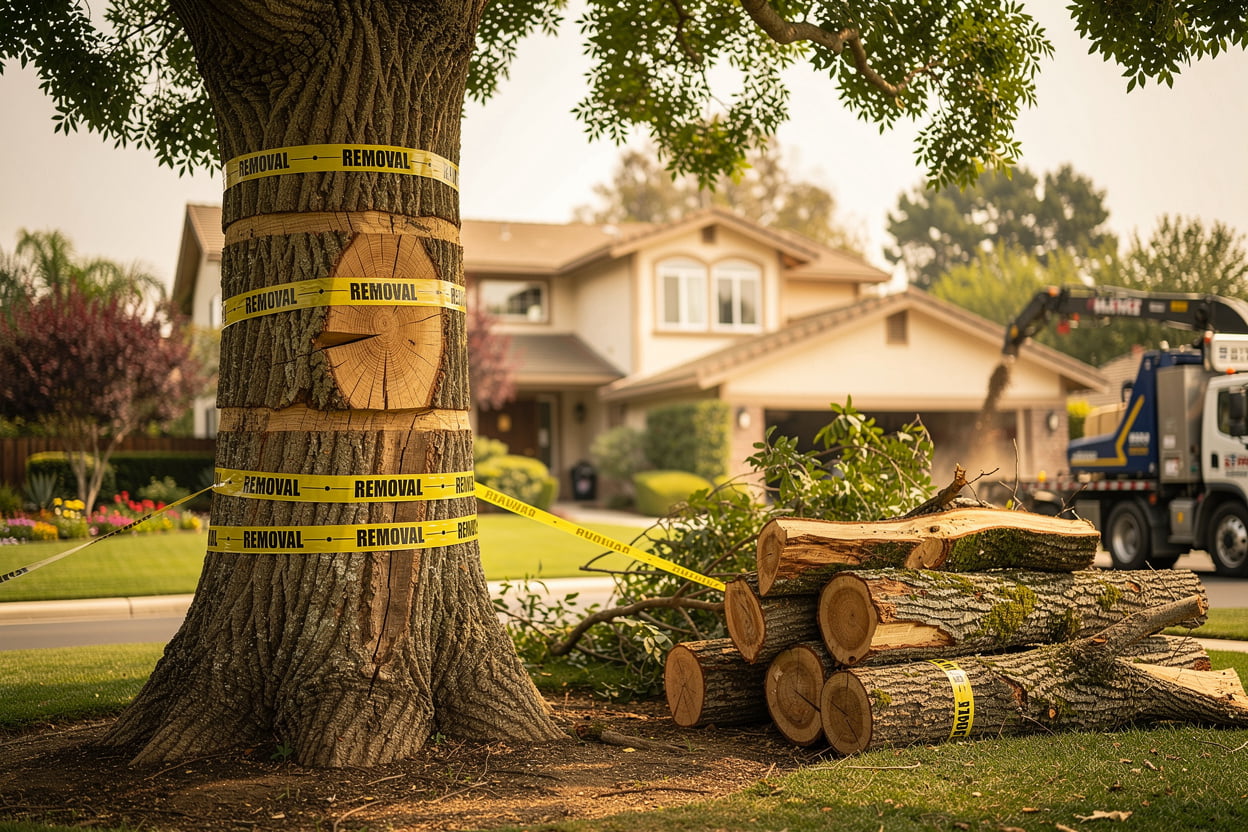
If you call three tree companies, you will probably get three very different numbers. That is normal, but it helps to know what the number is made of before you decide.
What drives the price
The biggest factor is size and access. A 30-foot tree in an open backyard with room to drop sections is a half-day job. The same tree wedged between a fence, a shed, and the house is a rigging job, and that takes more time, more crew, and more care. Expect the bill to climb quickly once a tree is close to a structure or a powerline.
Health and lean matter too. A dead or leaning tree can be more dangerous to cut than a healthy one because the wood is unpredictable. Crews plan for that, and it shows up in the quote.
Then there is what happens after the cut. Some quotes include stump grinding and wood hauling, some do not. Ask directly. A tree that comes down and leaves you with a stump and a pile of logs in the driveway is not finished.
Typical ranges
For a standard residential removal in most of California, homeowners often see somewhere in the range of a few hundred dollars for a small tree with easy access, into the low thousands for a large tree that needs rigging. Stump grinding is usually priced separately, often by the diameter of the stump. Treat these as rough ballparks, not quotes. Your own yard will decide the real number.
Ways to keep the cost reasonable
Bundle the work. If you are already having a tree removed, ask whether the same crew can trim nearby trees or grind the stump while they are there. Mobilizing a crew is a fixed cost, and spreading it across more work usually lowers the per-job price.
Also ask whether the company does hazard tree removal or a removal you could schedule for a slower season. Crews are often less booked in the off-season, and you may get better availability.
What to ask for in a quote
Get the quote in writing and make sure it says whether it covers cleanup, wood hauling, and stump grinding. Ask who is insured, and confirm it with a certificate rather than taking their word for it. A low number from someone without insurance can cost you far more if a limb takes out a roof.
If a tree is near a powerline, do not let anyone other than the utility or a qualified line-clearance crew work in that zone. Get that part of the job scoped separately.